
Take Five with Artist-in-Residence Quincey Spagnoletti
November 19, 2026 by Katie Baum
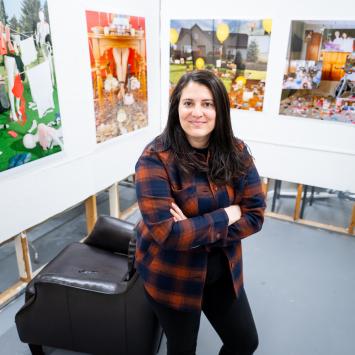
Meet 2026/27 Visual Artist-in-Residence Quincey Spagnoletti:
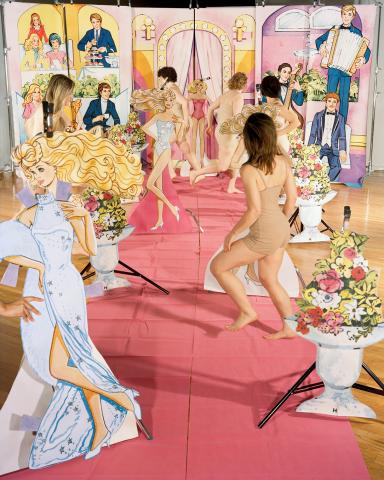
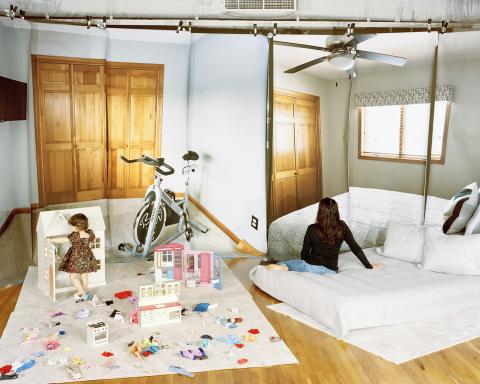
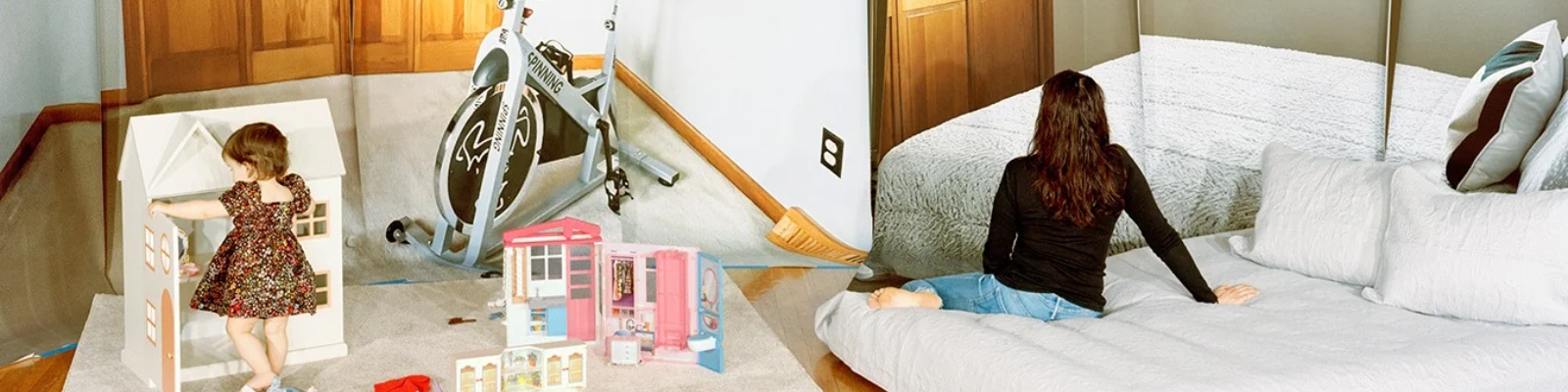
Quincey Spagnoletti is a Boston-based photographer whose practice explores identity and womanhood through photography, installation, and performance. Rooted in her personal history, her work combines images of the body with archival photographs from her childhood to construct layered narratives that examine memory, selfhood, and representation.
She received a BA from Colgate University and an MFA from the School of the Museum of Fine Arts at Tufts University. Her work has been featured in The Boston Globe, Boston Art Review, Der Greif, Photoworks UK, and FOTOFILMIC JRNL, among other publications. She is the recipient of the Levitate Foundation Emerging Visual Artist Grant (2026) a City of Boston Opportunity Fund Grant (2026 & 2024) and the CAA Becker Fund for Visual Artists Grant (2025). She was recognized as one of Lenscratch's Top 25 Student Photographers to Watch (2024) and a Top 200 Critical Mass Finalist (2024).
Spagnoletti was the 2025–2026 Artist-in-Residence at Pratt Munson College of Art & Design, where she presented her debut solo exhibition, Home Studio, at the Pratt Munson Gallery at the Munson Museum of Art. Her recent residencies include the Wassaic Project (Summer 2026) and Umbrella Arts in Concord, MA, where she is currently a Visual Artist-in-Residence. She is also the 2026-2028 Emerging Artist Fellow at The Kingston Gallery in Boston, MA.
What’s your earliest or most treasured memory of making art?
I’ve loved photography for as long as I can remember. Growing up, I went through countless disposable cameras, always excited to finish a roll of film and take it in to be developed. I loved the anticipation of getting those photographs back and seeing the little moments I had captured, often without thinking much about them at the time. Looking back, I think that curiosity was the beginning of my relationship with photography. But it wasn’t until college, when I took an introductory black-and-white film photography course at Colgate University, that I began to see photography as something more than a hobby and started to find my voice as an artist.
It was in that class that I met Professor Linn Underhill, who saw something in my work and encouraged me to keep exploring it. She became my academic advisor and, more importantly, a mentor who helped shape the way I think about photography. Through her guidance, I began to understand the medium as a way of telling stories and communicating ideas that sometimes felt difficult to put into words. She helped me realize that photography wasn't just about what I was looking at, but about how I chose to see it and what I wanted to share with others. That perspective has stayed with me and continues to inform the way I approach my work today.
Who do you admire who is currently working in your field?
When I was in graduate school, I was first introduced to the work of Sara Cwynar. Encountering her work marked a significant shift in my own practice. Watching the way, she leaned into the process of “making a photograph” was incredibly transformative for my studio practice. I began to incorporate more of the studio itself into my photoshoots, while also experimenting with C-stands as sculptural elements within my work.
The work of Guanyu Xu inspired me to think more deeply about incorporating my own archival imagery. Using photographs from my childhood and placing them within the lived-in spaces that serve as settings for my photoshoots has opened up an entirely new way of working for me. I am particularly interested in the way Xu creates juxtapositions between space, form, and personal history. This approach has encouraged me to explore similar relationships within my own work.
Laurie Simmons has also always been a major inspiration to me. She was one of the first artists I encountered who demonstrated how an inanimate object, such as a doll or a decorative cake, could be imbued with meaning, personality, or an implied narrative. I am drawn to the way her work creates a storyline while leaving room for the viewer to interpret it for themselves. Her ability to transform everyday objects into something psychologically complex and evocative continues to influence the way I think about image-making.
What are you most looking forward to experiencing or accomplishing during your Umbrella Arts residency?
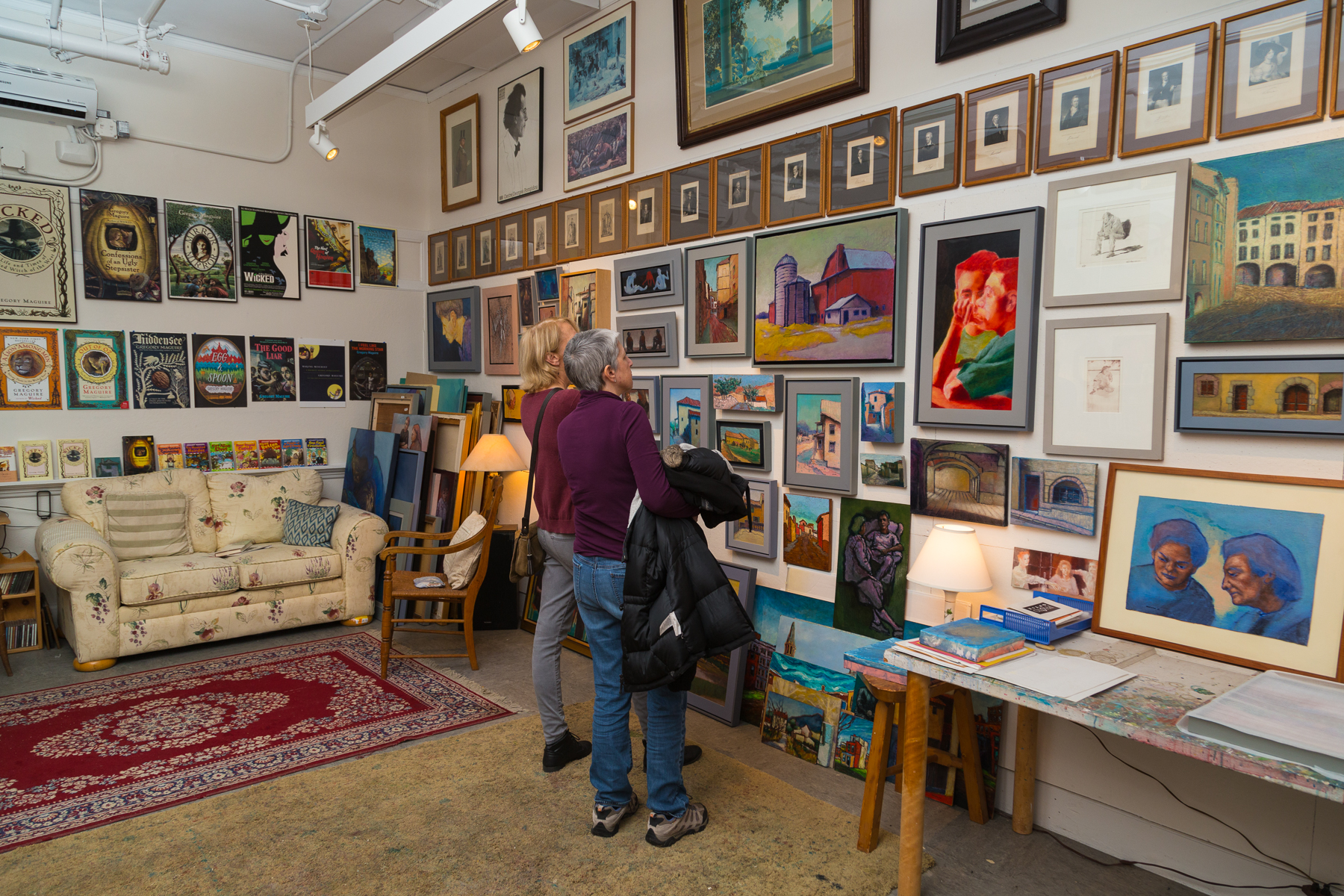
The Umbrella Arts residency has given me something I didn’t realize how much I needed: the space and time to slow down, organize my thoughts, and reconnect with my practice. I haven’t felt this settled and supported in a creative space since graduate school, and it’s something I’ve come to really value. Having a dedicated space and the freedom to experiment, explore new ideas, and make work without feeling rushed has been incredibly meaningful. I’m genuinely grateful for this opportunity and excited to make the most of the year ahead. I’m looking forward to spending this time fully immersed in my practice, pushing my ideas further, and making as much work as I possibly can.
What’s your philosophy as a teacher of and/or ambassador for your art form?
I really love teaching photography. Since receiving my MFA, I've been fortunate to teach at several collegiate institutions, and teaching has become a really meaningful part of my life as an artist. One of the things I try to instill in my students is the idea that photography can be much more than a way of documenting what's in front of us. It can also be a way to tell stories, reflect on a particular moment in our lives, and make sense of our own experiences.
I always try to push my students a little outside of their comfort zones and encourage them to think differently about the medium. Many come into my classes thinking about photography primarily as documentation, which, of course, is an important part of what photography does. But I like to challenge them with a different question: What happens when a photographer starts thinking more like a painter? What happens when you begin to consider every element within the frame, carefully constructing an image rather than simply capturing what is already there?
I sometimes get a fair amount of pushback when I introduce this way of thinking, which I actually enjoy. It asks students to reconsider what they understand photography to be and what their role as image-makers can look like. Once they begin experimenting with this approach, they tend to have a strong reaction. They either really love it or decide it's not for them. Either way, I think that moment of discovery is important. I want my students to leave my classroom with a broader understanding of what photography can be and, more importantly discover the confidence to take risks.
Image Gallery